
Governance & More · ERP Module
Document Management ERP Module
Attach documents to the project, customer, sale, contract, legal and service records they belong to.
Customer documentsContract documentsLegal evidence
Operational depth
This is not a feature page. It is a working part of the ERP.
Attach documents to the project, customer, sale, contract, legal and service records they belong to.
01Customer documents
02Contract documents
03Legal evidence
04Record-linked files
Walk through this workflow Live product · project-focused demo
ONE PROJECT RECORD
LIVE OPERATIONAL CONTEXT
Connected views
Move through the surrounding workflow — without losing context.
The module does not sit alone. Open the connected PropLink views that feed it, receive from it, or continue the same customer, property or financial record.
Book a live walkthroughPROPLINK · LIVE PRODUCTCONNECTED
WORKSPACE 01Document Management ERP Module
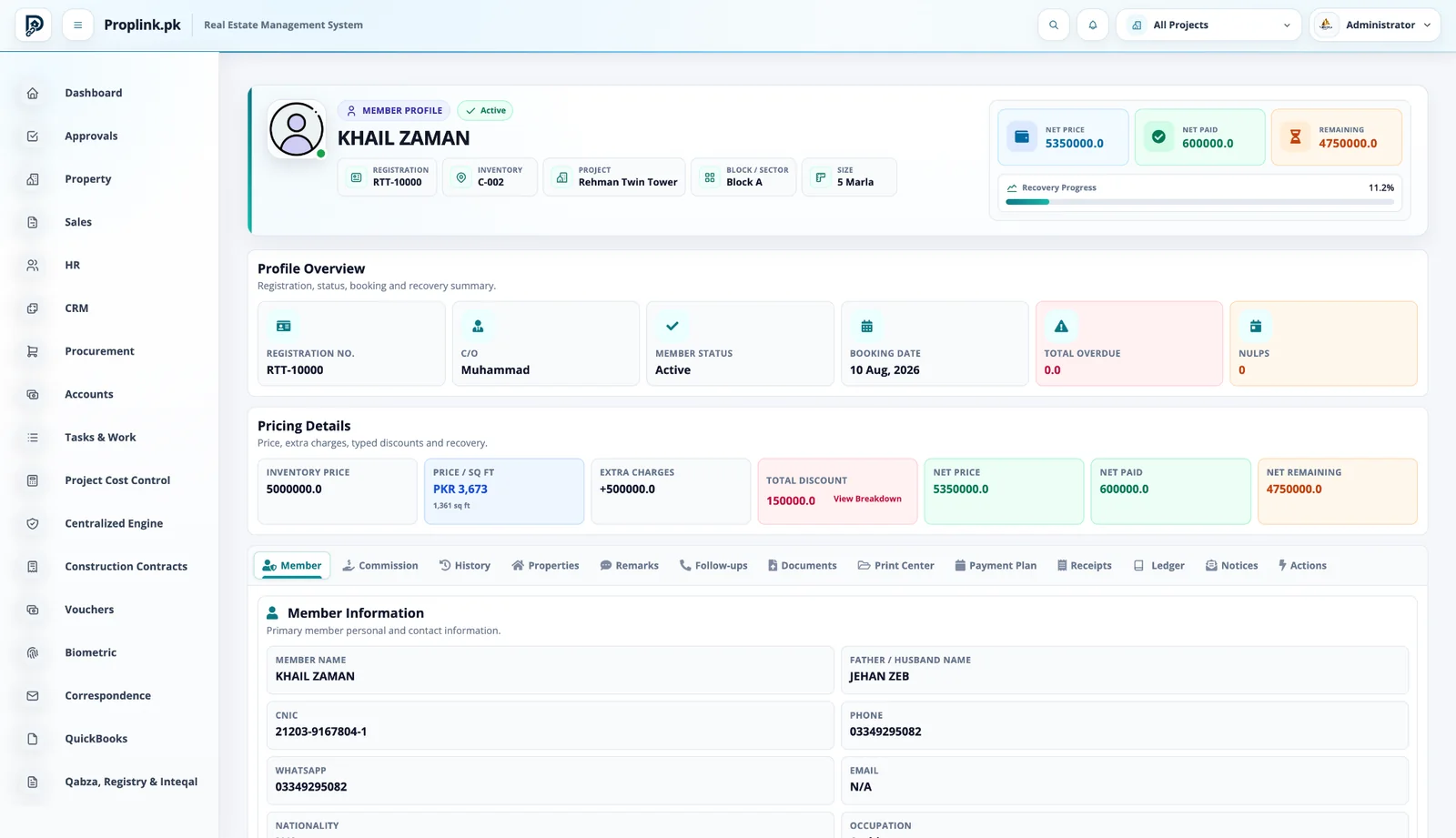
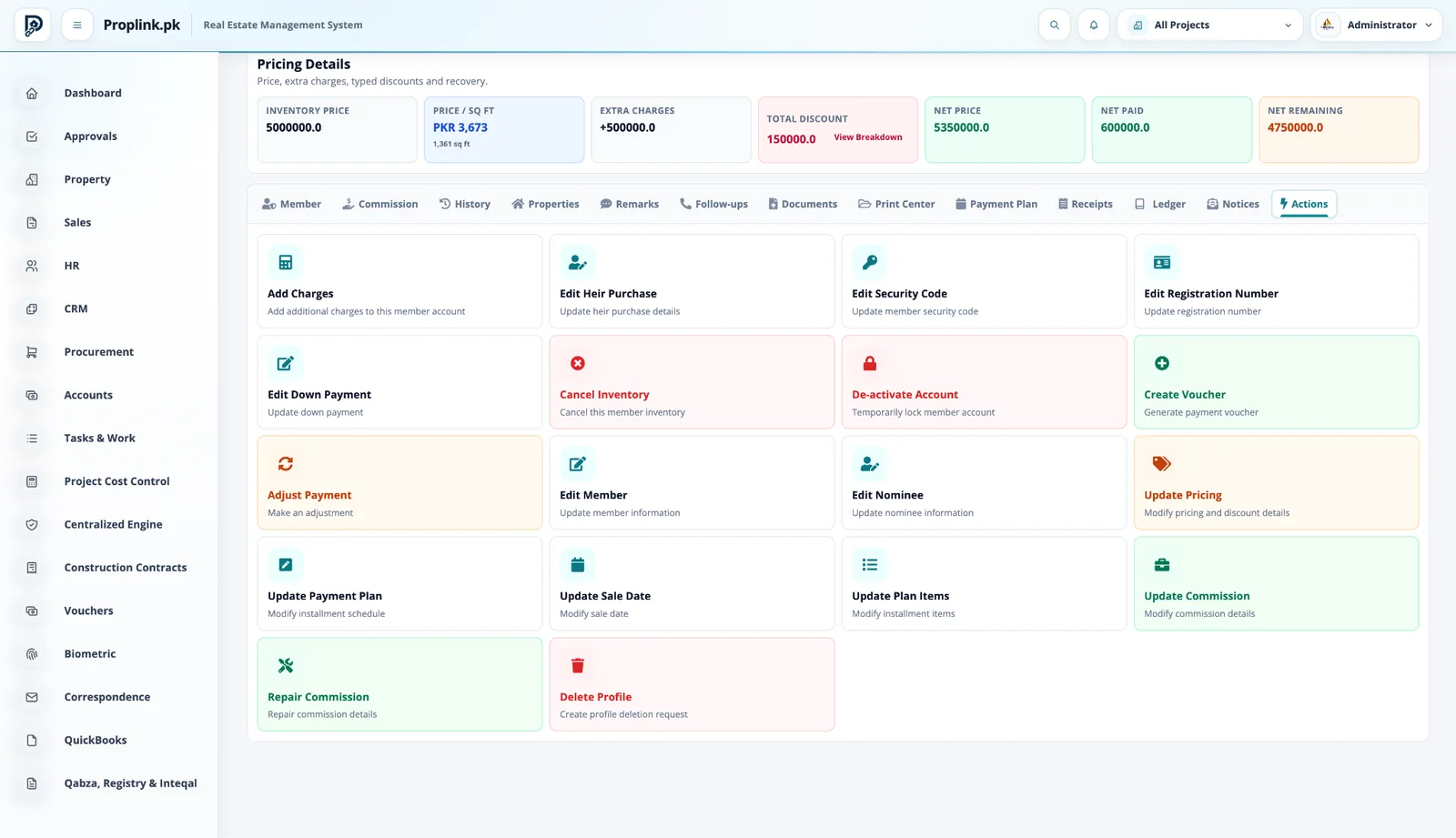
Pricing, discounts, recovery progress, documents, payment plans, receipts, ledger, notices and actions stay on one customer record.
REAL DATA FLOW
PROJECT SCOPED
Want to see Document Management ERP Module on your workflow?
Tell us your project type and the departments you want to connect.
FAQ
Frequently asked questions
Answers to common questions about this PropLink workflow.
Yes. PropLink uses permission-aware workspaces so access to modules and actions can be limited according to a user’s responsibilities.
Yes. Project scope and module permissions work together so users can be limited both by what they can do and which projects they can work on.
Yes. Activity and audit-related records help management review important user and system actions.
Yes. Approval workflows can be used for sensitive business actions such as discounts, adjustments, refunds, procurement, policy overrides and other configured processes.
The centralized policy engine is designed to maintain policies, obligations, charges, waivers, locks, overrides and decision history in one governance layer.